
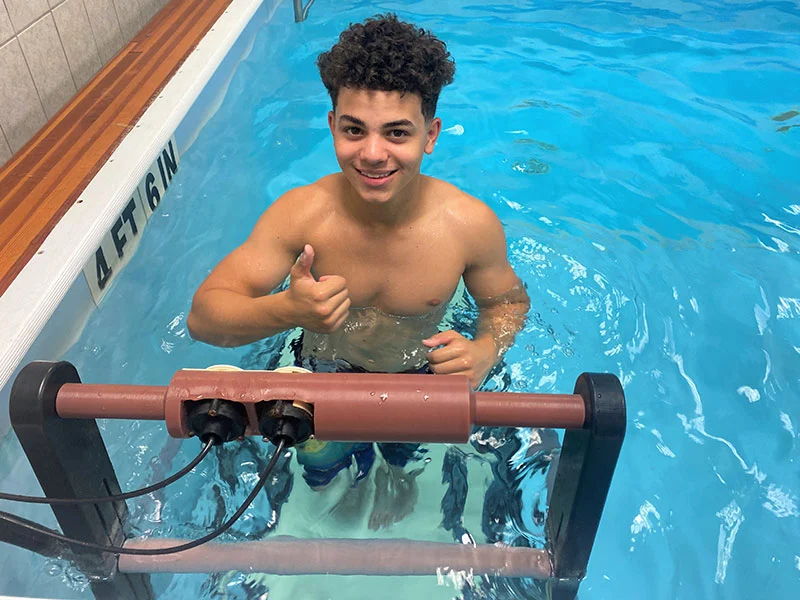
Warm Water That Lets You Move Without Pain
When an injury, surgery or chronic condition makes every step on land feel difficult, water can change everything. At Oxford Rehabilitation Center in Philadelphia, PA, our heated therapy pool combines warmth, buoyancy and gentle resistance so you can stretch, strengthen and rebuild endurance with far less strain on sore joints and muscles. Aquatic therapy is one of several non-surgical treatments we use to help patients recover faster and get back to daily life.
Request an AppointmentHow Water Supports Your Recovery
Our aquatic therapy pool is heated to a soothing 98 degrees. That warmth, combined with the natural properties of water, creates an environment where healing tissue can move safely. Each property of the water plays its own role in your recovery:
- Buoyancy: Water supports much of your body weight, taking pressure off your spine, hips, knees and ankles. Many patients can walk, bend and lift their arms in the pool long before they can do so comfortably on land.
- Hydrostatic pressure: The gentle, even pressure of the water around your body helps reduce swelling at the injured site and supports circulation.
- Warmth: Heated water relaxes tight muscles, eases joint stiffness and increases blood flow, which helps bring nutrients to healing tissue.
- Natural resistance: Moving through water provides steady resistance in every direction, so you build strength without heavy weights or sudden jolts.
Because the water slows movement down, it also gives you more time to react. That makes the pool a safer place to practice balance and coordination, especially if you are worried about falling.
Key Benefits Patients Notice
Aquatic therapy is a water-based form of physical therapy. You perform guided movements, stretches and exercises while submerged, and the gentle repetition creates a calm setting that lowers stress and encourages healing. Over the course of treatment, patients commonly experience:
- Lower pain levels during and after activity
- Reduced swelling and inflammation
- Greater flexibility and joint range of motion
- Stronger, more supportive muscles
- Better walking pattern and gait, both in and out of the water
- Improved balance and coordination
- Better aerobic capacity and muscular endurance
- More confidence returning to work, sports and everyday activities

Conditions That Respond Well to Pool Therapy
Our Pennsylvania rehab team may recommend aquatic therapy on its own or alongside other treatments to help control and reduce pain. Patients have seen marked improvement with water therapy for:
- Sports-related injuries
- Personal injury and auto accident injuries
- Lower back pain and sciatica
- Fibromyalgia
- Arthritis and joint pain
- Repetitive motion injuries
- Post-surgical recovery and rehabilitation
- Orthopedic injuries
- Muscle weakness from an acute or chronic injury
Reducing Chronic Pain With a Complete Plan
On its own, aquatic therapy can make a real difference in how much pain you feel day to day. Restoring strength and flexibility to joints and muscles affected by an accident or age-related condition helps your body move more efficiently, which takes stress off painful areas. As your endurance improves, you can enjoy more physical activity outside of your therapy sessions.
For many patients, the best results come from combining pool sessions with other forms of restorative care. Depending on your needs, your plan may include land-based physical therapy, massage therapy, acupuncture or chiropractic treatment. As you progress, we gradually shift exercises from the water to land so your gains carry over to real-life movement.
Our facility also includes a fitness center, giving you a clear path from early recovery in the pool to full-strength training. To learn more about how sessions are structured and what to expect, visit our main aquatic therapy page.
Questions About the Benefits of Aquatic Therapy
Why is aquatic therapy easier on the body than land exercise?
Water’s buoyancy supports a large share of your body weight, which reduces the load on your spine and joints. That lets you move through a fuller range of motion with less pain, so you can start strengthening sooner after an injury or surgery.
How warm is the therapy pool?
Our pool is heated to about 98 degrees. The warmth helps relax tight muscles, ease stiffness and improve circulation, making it more comfortable to exercise and stretch.
Can aquatic therapy help reduce swelling?
Yes. The hydrostatic pressure of the water applies gentle, even compression around submerged body parts, which can help reduce swelling and support fluid movement away from the injured area.
Do I need to know how to swim?
No. Aquatic therapy is not swimming. Most exercises are done standing or holding onto the side of the pool in shallow water, and a member of our team guides you through every movement.
Will the benefits carry over to everyday life?
They should. Aquatic therapy improves strength, balance, flexibility and endurance, and patients often notice a better walking pattern and coordination on land. We also add land-based exercises as you progress so those gains transfer to daily activities.
Is aquatic therapy a good option for chronic pain conditions?
Many patients with fibromyalgia, arthritis, back pain and other long-term conditions find water exercise more tolerable than land exercise. The calming environment and reduced joint stress make it easier to stay active consistently, which is key to managing chronic pain.
How soon will I notice results?
Many patients feel looser and more comfortable after their first few sessions. Lasting improvements in strength and function build over several weeks, depending on your condition and how consistently you attend.
Experience the Relief of Warm-Water Therapy
Oxford Rehabilitation Center is located at 6735 Harbison Avenue in Philadelphia, PA. Call us at (215) 725-2000 or request a visit online to schedule your first aquatic therapy session and start moving with less pain.